
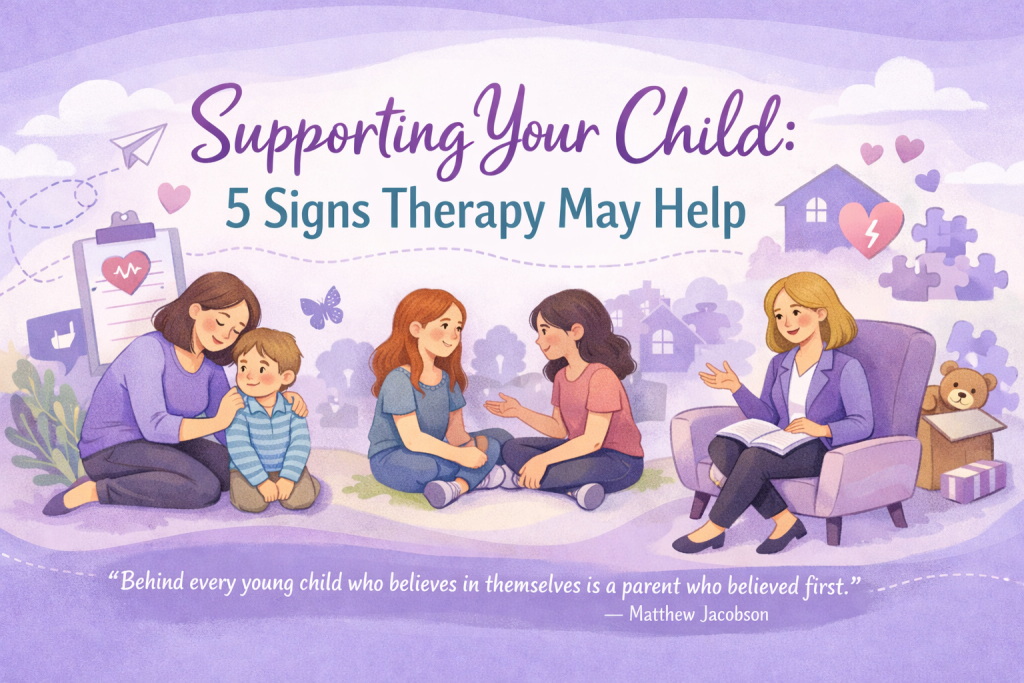
All kids have hard days. But when struggles become persistent, intense, or start interfering with daily life, extra support can make a meaningful difference.
Here are five signs your child or teen may benefit from therapy — and how a therapist can support your whole family in the process.
1. Big emotions that feel hard to manage
Frequent meltdowns, intense anxiety, anger outbursts, or shutting down can signal that your child is overwhelmed.
How therapy helps:
Therapists teach emotional regulation skills in developmentally appropriate ways — through play, conversation, and practical coping tools — while also helping you learn how to respond in ways that build regulation at home.
2. Changes in mood, sleep, or behavior
You may notice increased irritability, withdrawal, sadness, school refusal, or difficulty sleeping.
How therapy helps:
A therapist helps identify what may be underneath the behavior and provides strategies to support your child’s emotional needs — while guiding you on what to watch for and how to respond.
3. Ongoing anxiety or worries
Excessive fears, perfectionism, avoidance, or constant reassurance-seeking may indicate anxiety that isn’t resolving on its own.
How therapy helps:
Children and teens learn coping strategies to manage anxious thoughts and build confidence, and parents receive tools to reduce unintentional reinforcement of anxiety patterns.
4. Social struggles or peer difficulties
Difficulty making or keeping friends, conflict with peers, or social withdrawal can impact self-esteem.
How therapy helps:
Therapists can work on social skills, perspective-taking, and confidence — while helping parents support healthy social development outside of sessions.
5. Family transitions or significant stress
Divorce, moves, loss, medical concerns, academic pressures, or developmental diagnoses can feel overwhelming.
How therapy helps:
Therapy provides a safe space to process change and build resilience. Parents receive guidance on how to talk about hard topics and support adjustment at home.
Therapy Supports the Whole Family
When a child or teen is in therapy, parents are part of the process. You gain:
- Insight into what your child is experiencing
- Practical tools you can use at home
- Support navigating challenging behaviors
- A collaborative partner who understands child development
You don’t have to figure this out alone.
Early support can prevent struggles from becoming more entrenched — and help your child build skills that last a lifetime.